Investors ask for a product, not a deck
You have the deck, the financial model and a feature list, and the investor call ends on one question: can we click it. Without a working version — there is no second call.
We build the first working version of your product with the features needed to test one hypothesis. Scope, timeline and price are agreed before the build starts, not along the way.

You have the deck, the financial model and a feature list, and the investor call ends on one question: can we click it. Without a working version — there is no second call.
The feature list grew after every meeting because the scope was never closed, and the launch date moved every month. Six months of work — and not a single user.
You send one brief and get back quotes that differ several times over, because each describes a different scope. You have one budget — and you are choosing blind.
One hypothesis to test and a closed v1 feature list
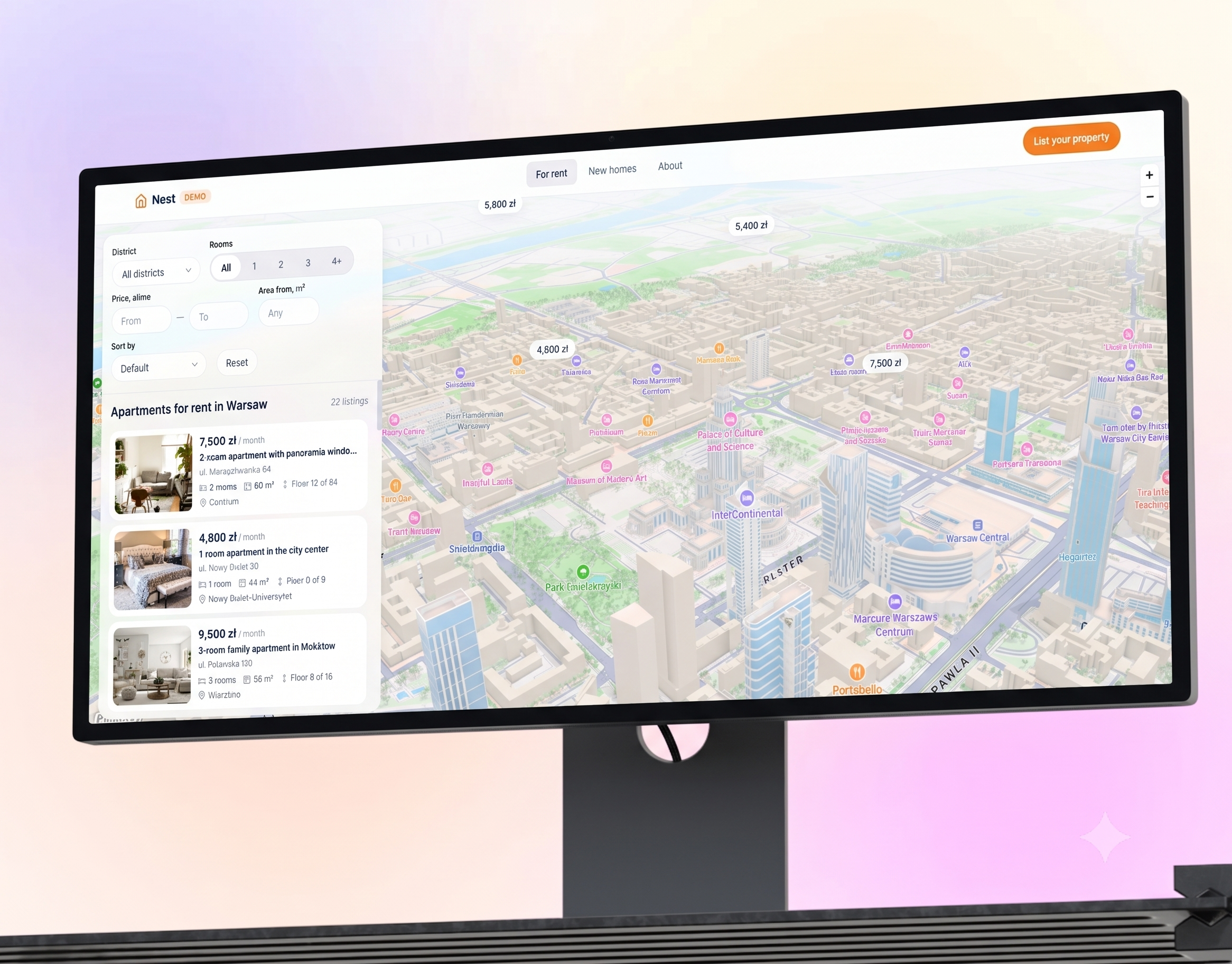
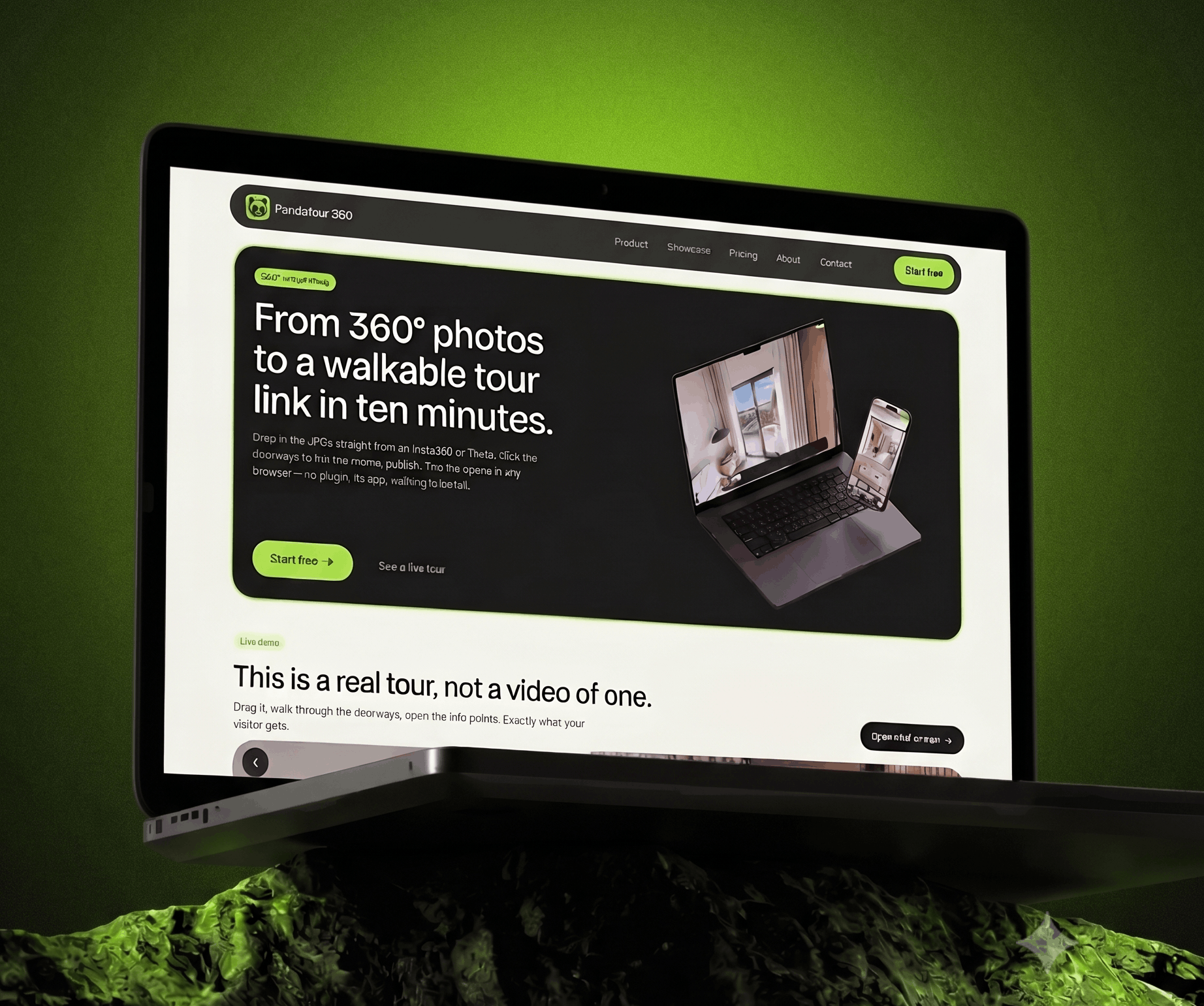
Screens wired into transitions, before the first line of code
Production screens with empty, error and loading states
React, TypeScript, backend, database, API and integrations
Complete user journeys across browsers and devices
Production, domain, monitoring and events on the key steps
We break the idea into one hypothesis and the user journey that tests it. Features are split into v1 and deferred, and each deferred one carries its reason, so after launch you know what to come back to.
We build a clickable prototype of the main journey and quote a closed scope. The 3–5 weeks start when you accept that quote — which is why we do not name a date before we know what we are building.
We design the screens of the agreed journey together with the empty state, the error state and the mobile layout. In parallel we settle the architecture, the data model and the integration points, so the build never stalls on a technical decision.
We code the frontend, backend and integrations, and push the result to staging every week. You see a working product during the build and can weigh in before a feature spreads to the next screens.
We test complete journeys against the acceptance criteria agreed with the scope, across browsers and on phones. We fix what breaks, prepare the initial data and write the messages users meet on day one.
We ship to production: domain, certificate, monitoring and analytics. We hand over access, the architecture documentation and the list of features deferred to the next version, each with the reason behind it.
Both routes make sense — in different situations. Here is what actually changes between them.
| Full version up front | MVP | |
|---|---|---|
| Feature scope | The whole list from strategy sessions and investor conversations, including everything nobody has validated yet | One main user journey and the features without which it cannot be completed or measured |
| Time to first users | Months — the first users see the product only at the very end of the build | 3–5 weeks from the moment the scope and quote are agreed |
| What is settled before the build | The scope keeps growing during the build, so the date and the cost only become clear along the way | A closed v1 feature list, a date and a fixed price — all agreed before the first line of code |
| What you validate | Everything at once — after launch it is hard to say which feature worked | One hypothesis — you know what you are testing and how you will read the result |
| Cost of changing direction | High: you rewrite finished, tested modules | Low: you change the plan and the feature list, not months of code |
| What you risk | Spending the budget on features nobody uses, and finding out last | Some features wait; if the hypothesis holds, you add them to the code that already exists |
| When to choose it | The process is known, you have paying customers, or requirements are hard — regulatory ones, for example | You are testing an idea, the budget is limited, and you need a product for the next investor conversation |
After the scope workshop, together with the clickable prototype. What moves it is the number of screens and roles, the integrations, and whether v1 carries a mobile release. Once you accept, the price is fixed.
3–5 weeks once the scope is agreed — from the moment you accept the v1 feature list and the quote. The workshop and the prototype take about a week before that.
One main user journey and the features without which it cannot be completed or measured. We defer roles beyond the first two, the admin panel, billing before the first paying customer, and native releases.
Yes. Same stack as the full products: React, TypeScript and a backend chosen for the project. We defer features, not code quality — extra roles and integrations are added to the existing codebase.
Fixed price for a closed scope — which is exactly why the workshop before the build gets so much attention. Post-launch development is billed monthly or as further fixed-price stages.
A normal outcome — an MVP exists to produce data, not to confirm assumptions. We go back to the hypothesis list and quote the new scope separately. You change the plan, not months of code.
Yes, that is where we start. The workshop applies one test: a feature stays in v1 if the main journey cannot be completed or measured without it. Everything else goes on the deferred list.
Tell us what the first version needs to prove. We reply within one business day, and after the workshop you get the v1 feature list, a timeline and a fixed price. We have been on the market for four years, and the products we have shipped have more than 50,000 users between them.